The Santa Margarita River Watershed
A Shared Resource with Deep Roots
The Santa Margarita River Watershed has supported human life for thousands of years. Long before modern communities or public water systems existed, the Cahuilla, Ramona, and Pechanga peoples lived throughout this region, sustaining their villages and cultural traditions with the water provided by the river and its aquifers. Their long-standing connection to these lands and waters continues today.
Tribal water rights — rooted in this deep history and affirmed in federal law — are an important part of how water is governed in the watershed. The Watermaster’s responsibility is to administer all water rights fairly and transparently, ensuring that Tribal, federal, agricultural, municipal, and private rights are carried out as established in agreements and court orders.
Why Our Watershed Matters
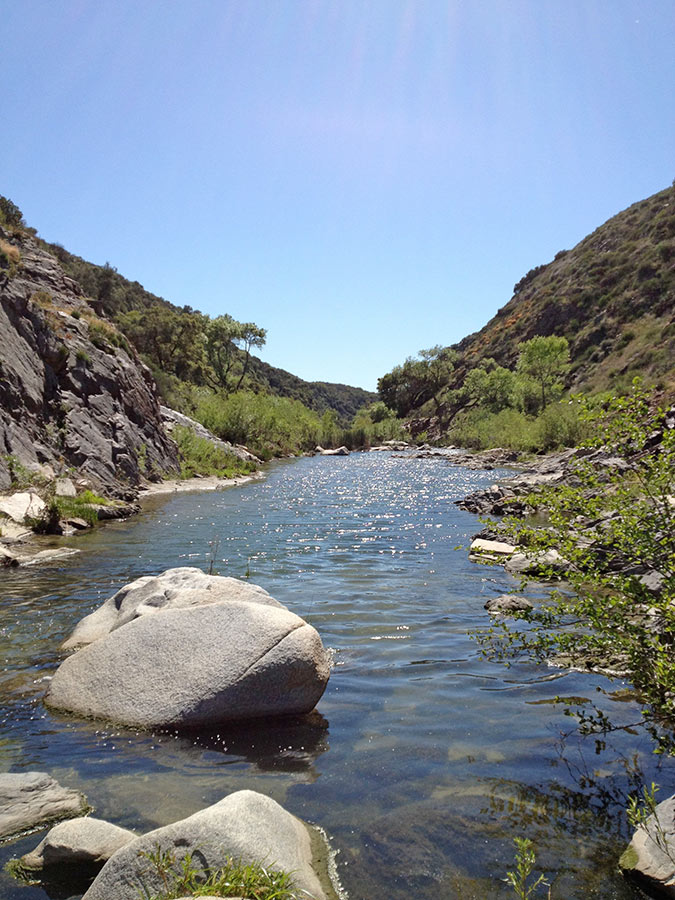
The Santa Margarita River Watershed is more than a geographic boundary — it is a shared water system that supports communities, economies, and ecosystems across the region.
Alongside imported water that comes from hundreds of miles away, the watershed continues to provide a meaningful local supply. Groundwater basins and river flows support Tribal communities, growing cities, agriculture, and federal lands, all drawing from the same interconnected resource.
Because this water is shared, how it is measured, managed, and understood affects everyone. Reliable local water reduces dependence on imported supplies, strengthens drought resilience, and helps maintain long-term stability for the region.
At the same time, the watershed reflects a deep and continuing history — from the earliest Tribal stewardship to today’s complex network of water users. It is both a natural system and a human one, shaped by geography, law, and collaboration.
How Local Water Supports Our Communities
Local Supply in Practice
The Santa Margarita River Watershed is a vital resource for local communities. Understanding how this local water supports each area helps illuminate the value of careful watershed management.
Temecula / Murrieta / Winchester Area
Around one-third of the water used in the Temecula Valley comes from local watershed sources, primarily groundwater. This local component improves drought resilience and reduces reliance on imported water.
Fallbrook / De Luz Area
About half of Fallbrook’s water now comes directly from the watershed’s river and groundwater basins, thanks in part to the Santa Margarita River Conjunctive Use Project. This has significantly improved local reliability and long-term water security.
Camp Pendleton
All of Camp Pendleton’s water comes directly from the Santa Margarita River watershed, supporting base operations, training activities, and environmental needs. This complete reliance highlights the critical role of responsible watershed management in maintaining operational readiness.
Aguanga/Anza Area
Without access to any imported water supplies, the communities of Anza and Aguanga are 100% reliant on local water supplies from the watershed.
Stewardship for Today and Tomorrow
The Santa Margarita River Watershed is a shared resource connecting Tribal Nations, local residents, agriculture, Camp Pendleton, and diverse ecological communities. The Watermaster’s mission is to help ensure that this resource is:
- Measured accurately
- Used fairly
- Protected responsibly
- Sustained for the future
By honoring the history of the watershed and working collaboratively with all who depend on it, the Watermaster supports a balanced, transparent, and resilient water system for generations to come.